

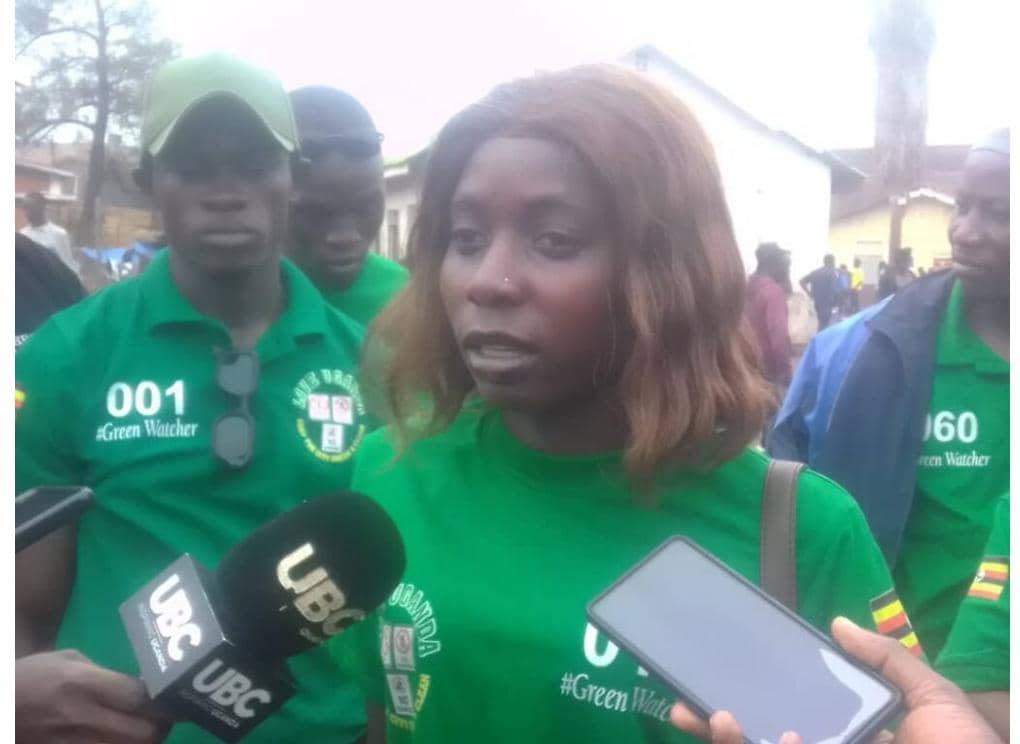
A group of young environmental activists under the Love Uganda initiative has launched a city clean-up and restoration campaign aimed at rehabilitating damaged green spaces in Kampala, particularly in the city centre where grass and walkways were heavily affected during the Christmas festivities.
The campaign focuses on planting grass and trees, while also sensitising the public on the importance of environmental protection. The youth say the initiative was born out of concern that many people—especially fellow young Ugandans—often take the environment for granted, despite depending on it for clean air, good health, and sustainable livelihoods.
Speaking to journalists in Kampala, members of Love Uganda said the campaign seeks to promote a culture of environmental responsibility among urban residents and encourage young people to take an active role in protecting their surroundings.
“Our mission is to clean the city and ensure that the environment is protected, including restoring and maintaining green grass in public spaces,” said Rachel Natukunda, a member of the initiative. “Many young people shy away from this kind of work, yet our lives depend on the environment. If we continue to neglect it and allow pollution and gas emissions to take over, we are putting our own lives at risk.”
Natukunda emphasized that environmental conservation is closely linked to economic and social well-being, noting that prosperity cannot be sustained in a degraded environment.
“You cannot remain wealthy or healthy for long if the environment you live in is not okay,” she said. “A clean and green city supports a productive population.”
She further observed that limited public awareness remains a major challenge to conservation efforts, with many people failing to understand the long-term consequences of environmental degradation.
“Some people do not realize that cutting down trees interferes with the fresh air we breathe,” Natukunda explained. “Through this initiative, we want to educate the public about environmental conservation and climate change mitigation. We also call upon the public to support and protect these green spaces.”
Another member and leader of the initiative, Simon Kayongo, said his decision to join Love Uganda was driven by personal concern over how public spaces are treated in the city.
“One day I was downtown and saw people stepping all over grass that had been planted by Kampala Capital City Authority workers,” Kayongo said. “It was painful to watch because I understand how important green spaces are to our environment. When I got the opportunity to join Love Uganda, I did not hesitate.”
Kayongo identified the continued destruction of protected grass as one of the biggest obstacles to restoring Kampala’s green areas and urged authorities to strictly enforce existing environmental laws to deter such behaviour.
“If people see that the law is being implemented, they will stop disrespecting the environment,” he said. “Climate change is not just a global issue; it is also a result of our own bad behaviour and negligence.”
The group also appealed to government institutions and development partners to support youth-led environmental initiatives, noting that their work is largely voluntary and often carried out with limited resources.
Despite the challenges, members of Love Uganda say they remain committed to restoring Kampala’s green spaces and inspiring a new generation of environmentally conscious citizens, convinced that protecting the environment today is an investment in the country’s future.
